
Mommy Makeover Safety: Understanding the Risks
- A mommy makeover is major surgery — combining procedures increases both the benefits and the risks.
- The primary safety concern with combined surgery is extended anesthesia time, which correlates with higher complication rates.
- Most complications are manageable (infection, hematoma, seroma) when caught early, but VTE (blood clots) is the most serious risk.
- Board certification, accredited facilities, and honest candidacy screening are the strongest predictors of a safe outcome.
- Knowing the warning signs after surgery is as important as choosing the right surgeon.
Every surgery carries risk. A mommy makeover carries more than a single procedure because it combines two or more operations under one anesthesia session. That doesn’t make it reckless — it makes it a decision that requires clear-eyed understanding of the trade-offs.
This section is neither designed to scare you away from surgery nor to reassure you that everything will be fine. It’s designed to give you the data and the questions you need to make an informed decision with your surgeon.
The goal is simple: understand what can go wrong, how often it actually does, and what you can do to minimize your risk.
Because a mommy makeover means more time under anesthesia than any single procedure on its own, safety isn’t a boilerplate disclaimer here — it’s the biggest variable you and your surgeon actually control. The guides below start with what drives that risk up, then move to what a safe surgical setup looks like and what to watch for once you’re home.

Combined-Procedure Risk
Why combining surgeries changes the risk profile and what the research says about complication rates.
Risks & Complications
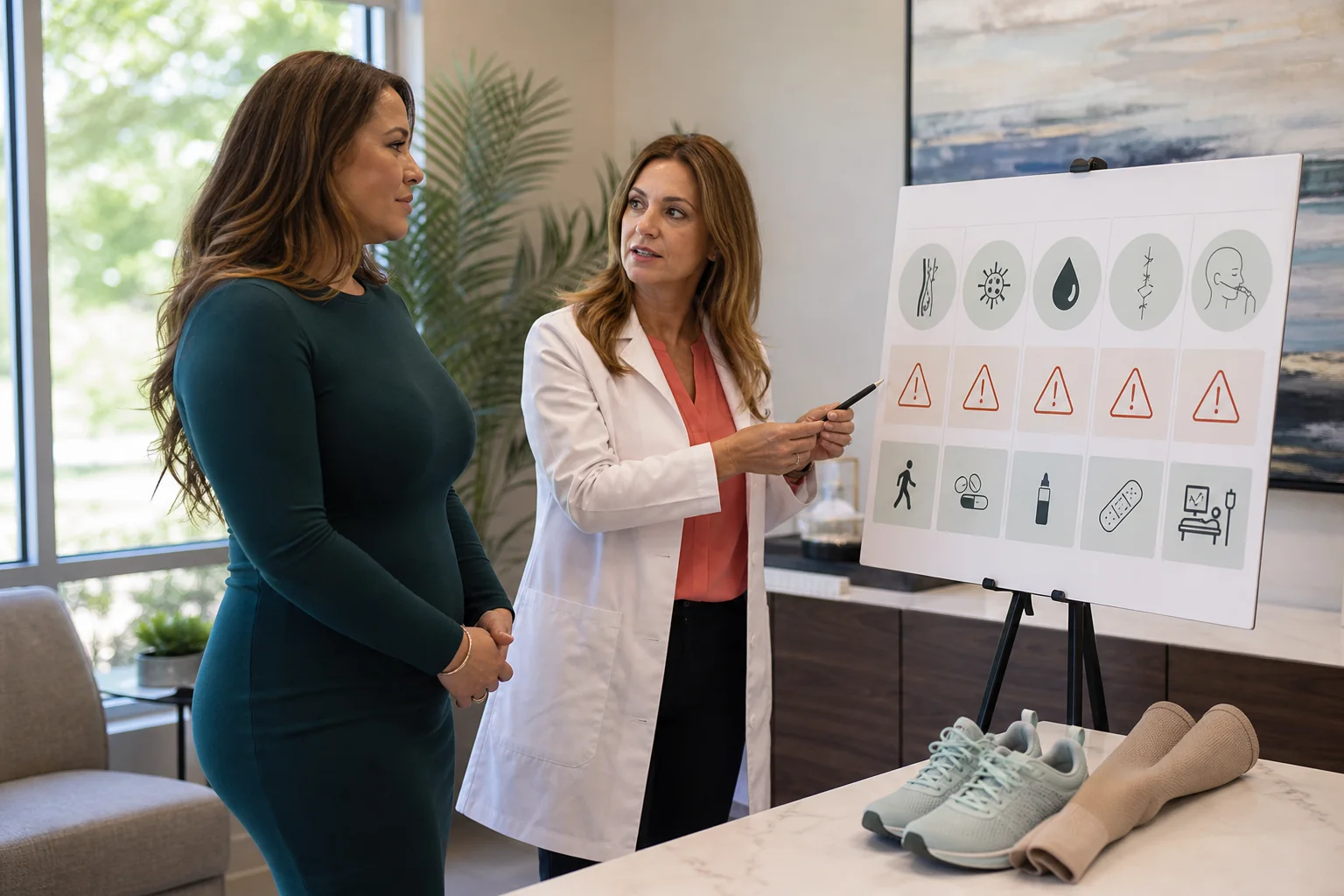
A frank breakdown of the most common complications — infection, hematoma, seroma, DVT — and how often they occur.

Anesthesia Time
How operating time affects risk, the six-hour guideline, and when staging is the safer choice.

Choosing a Surgeon
Board certification, facility accreditation, case volume — the credentials that actually predict safety.
Warning Signs After Surgery
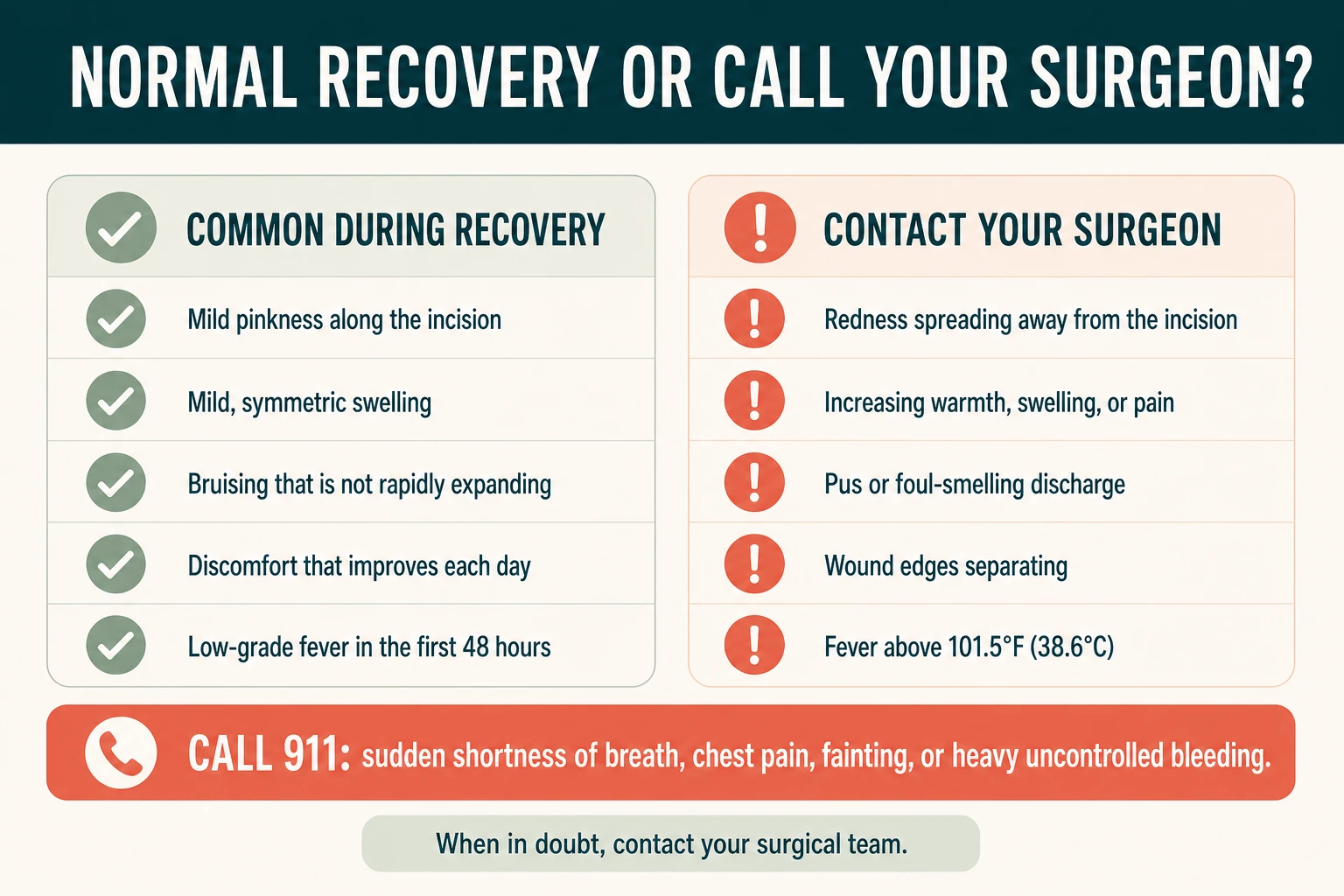
What’s normal discomfort, what needs a call to your surgeon, and what requires an emergency room visit.