
Mommy Makeover Turkey: An Honest Guide for US Patients
- Istanbul has become a major destination for cosmetic surgery — including mommy makeovers — largely due to prices 50–70% lower than the US.
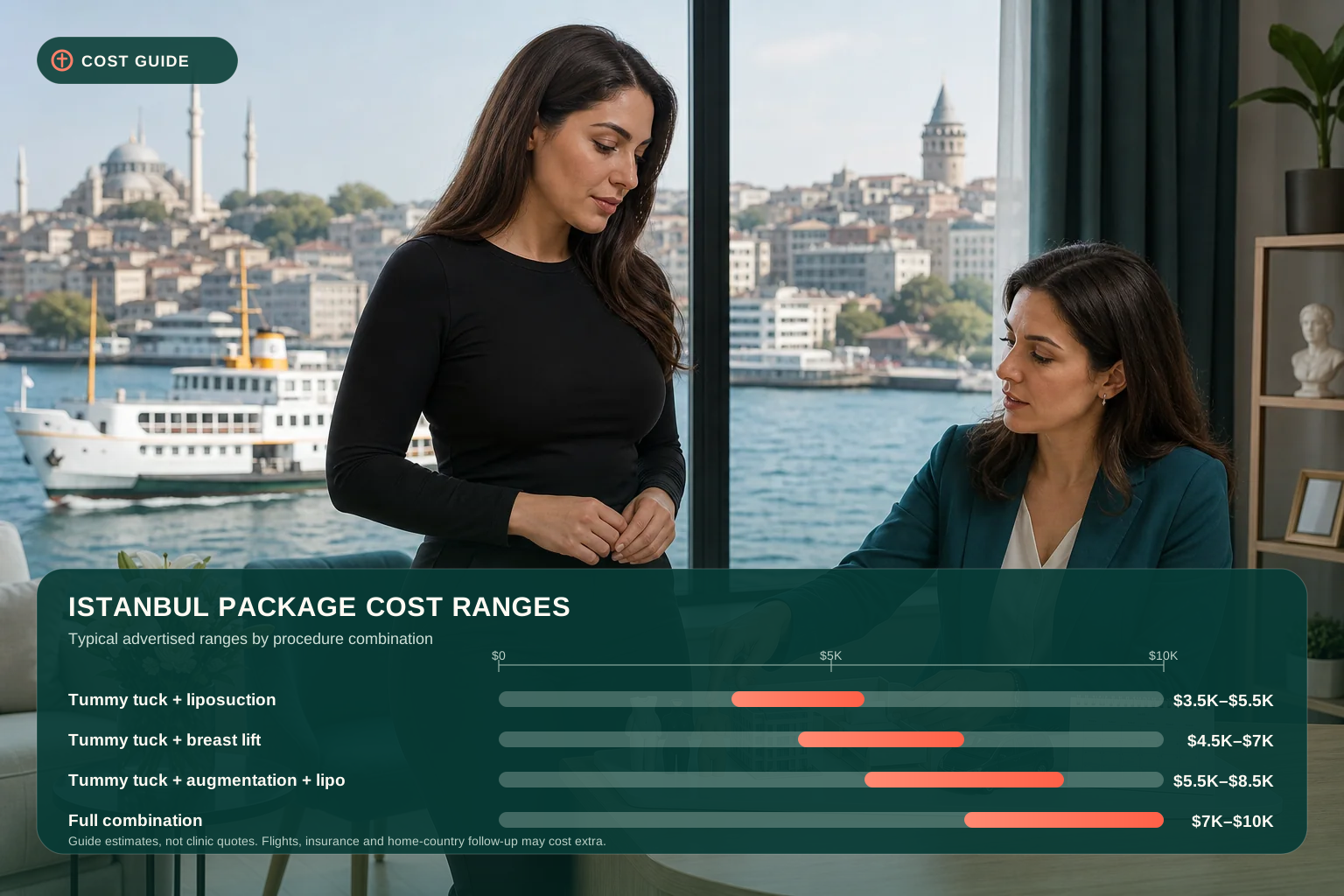
- A full mommy makeover in Turkey typically costs $4,000–$10,000 including hospital, hotel, and transfers, versus $12,000–$25,000+ in the US.
- Turkey has board-certified plastic surgeons with excellent training, but the quality gap between top-tier and budget clinics is significant.
- Flying home 10–12 hours within days of combined abdominal and breast surgery compounds VTE (blood clot) risk — this is not a minor detail.
- The follow-up gap is real: if a complication develops after you fly home, the surgeon who operated on you is 5,000+ miles away.
- This guide is independent. We are not a clinic, and we do not rank or recommend specific surgeons.
A mommy makeover Turkey package typically costs 50–70% less than the same combination of procedures in the US, and many Istanbul hospitals hold real international accreditation. But combining major surgery with a long-haul flight compounds blood-clot risk, and managing a complication after you’re home is genuinely harder than marketing pages suggest. Both facts are true at once.
If you’re researching mommy makeover Turkey options, here’s what the cost difference actually means — and what it doesn’t tell you. Turkey, and Istanbul in particular, has become one of the world’s top destinations for cosmetic surgery. The reasons are straightforward: significantly lower prices, modern hospital facilities, and a large pool of experienced surgeons.
But the decision to have major combined surgery abroad is not simple. The cost savings are real. So are the risks — particularly the VTE risk tied to a long-haul flight shortly after extensive abdominal and breast surgery, and the challenge of managing complications from thousands of miles away. This page walks through both sides honestly, then bridges to our in-depth guides on cost, surgeon verification, safety, the patient journey, and packages. We are not a clinic, we don’t perform surgery, and we don’t rank surgeons.
Why US Patients Consider Turkey
For most people who start searching for mommy makeover Turkey pricing, the appeal begins with a single number: a combined tummy tuck, breast surgery, and liposuction that might run $12,000–$25,000+ in the US is often quoted at $4,000–$10,000 in Istanbul, inclusive of hospital stay, hotel, and transfers.
That gap is not a marketing illusion. Lower labor and facility costs, a favorable exchange rate, and intense competition among a large number of surgeons genuinely allow Turkish providers to charge less for comparable operating time. Turkey also trains a large number of plastic surgeons, and its top hospitals include facilities accredited by Joint Commission International (JCI) — the same accreditation body used to benchmark leading US hospitals.
None of that means the decision is purely financial. Patients who choose Istanbul are also weighing recovery logistics, time away from work and family, and their own tolerance for the added risks that come with international travel after major surgery, covered honestly below. The savings are real; so is the fact that they come with trade-offs a US-based consultation simply doesn’t involve.
The Risks & Trade-Offs — Amplified for Combined Surgery
This is the section we won’t soften. A mommy makeover already carries higher complication rates than any single procedure performed alone — a large CosmetAssure-based study of combined body-contouring cases found complication rates roughly double those of single procedures, according to Winocour et al.1 Longer anesthesia time, greater blood loss, and a more demanding recovery are the baseline — regardless of where you have surgery.
Add international travel and the picture changes further. Surgery itself is a well-established trigger for venous thromboembolism (VTE) through the Caprini risk model that surgeons use to score patients, as validated by Pannucci et al.2 Separately, long-haul air travel is its own recognized VTE risk factor because of prolonged immobility and cabin conditions. A 2026 systematic review and meta-analysis of VTE risk in surgical patients with recent air travel found that combining the two — major surgery followed by a long flight — does not simply add the risks together; it compounds them, according to Shea et al.3
Concretely: a 10–12 hour flight from the US to Istanbul, taken within 10–14 days of combined abdominal and breast surgery, sits squarely in the highest-risk window for both surgery-related and travel-related clot formation. This is exactly the scenario a mommy makeover Turkey trip creates by default, and it deserves the same weight as the price tag when you’re deciding. For a deeper look at how operative time and combination choices affect risk more broadly, see our Combined Procedure Risk guide.
Cost in Turkey vs the US
US averages for a full mommy makeover — abdominoplasty, breast lift or augmentation, and liposuction — typically run $12,000 to $25,000 or more, depending on surgeon fees, geography, and the specific combination. Turkey packages for a comparable combination typically range from $4,000 to $10,000, usually inclusive of surgeon fees, anesthesia, a hospital stay of one to three nights, hotel accommodation, and airport transfers.
The comparison isn’t as simple as subtracting one number from the other. Flights, travel or complication insurance, medications, compression garments, and any revision surgery are rarely included in either country’s headline price, but they matter proportionally more on a Turkey trip because a return visit is a much bigger undertaking than driving back to your original surgeon’s office. A price that looks dramatically lower than the typical Turkey range is itself a signal worth investigating rather than simply accepting.
For the full line-by-line comparison — including what a “cheap” US quote and a “cheap” Turkey quote each tend to leave out — see Mommy Makeover Cost: US vs Turkey. For the Istanbul-specific breakdown of package inclusions, see our Cost in Istanbul guide.
How to Verify a Surgeon in Turkey
The single biggest predictor of your outcome — wherever you have surgery — is who operates on you. In Turkey, verification takes a bit more legwork than checking a US board certification, but it is entirely doable before you book anything.
At minimum: confirm the surgeon’s plastic surgery specialty certification through the Turkish Medical Association, ask which specific hospital the surgery will be performed at (not just the clinic brand that markets the package), and insist on a live video consultation with the surgeon who will actually operate — not only a patient coordinator. ISAPS membership is a useful supporting signal, though not a strict requirement.
Hospital accreditation matters as much as surgeon credentials. JCI maintains a public, searchable list of accredited organizations worldwide, including a number of hospitals in Istanbul, and it is worth confirming your specific facility appears on it.4 Our full walkthrough — including the exact questions to ask and how to spot a coordinator who can’t answer clinical questions — is at How to Verify a Surgeon in Turkey.
Is It Safe?
The honest answer is “it depends,” and anyone who tells you otherwise — in either direction — is oversimplifying. Some Istanbul hospitals meet the same accreditation standards as leading US facilities, and thousands of international patients have uneventful mommy makeovers there every year.
At the same time, the risk profile of a combined mommy makeover plus international flight is genuinely different from having the same procedures done thirty minutes from home. The additive effect of longer anesthesia, a multi-site recovery, and a compressed travel timeline is not marketing spin — it’s reflected in the complication and VTE literature cited throughout this page.
Safety in this context isn’t a fixed property of “Turkey” as a destination. It’s a function of your specific surgeon, your specific hospital, your specific flight timing, and how much due diligence you do before booking. Our complete safety assessment — including facility standards, complication data, and what to ask before you commit — is at Is a Mommy Makeover in Istanbul Safe?
The Patient Journey: Stay Length & Flying Home
A combined mommy makeover requires a longer stay than a single procedure, and the timeline matters more than most package marketing admits. Plan for a minimum of 10–14 days in Istanbul: roughly a day for arrival and in-person consultation, the surgery itself (typically four to seven hours under general anesthesia for a full combination), one to three nights of hospital monitoring, and a week or more of hotel-based recovery with regular surgeon check-ins before you’re cleared to travel.
That 10–14 day window exists specifically because of the compounded VTE risk described above — it is not an arbitrary hospitality upsell. Some patients need longer, particularly if drains are still in place or swelling hasn’t settled enough for a long flight to be reasonable. Compression garments, staying hydrated, and moving periodically during the flight all help, but none of them fully offset the risk of flying too soon after a long combined operation.
A day-by-day breakdown of what to actually expect — consultation, surgery day, hospital recovery, hotel recovery, and departure — is at The Patient Journey Day by Day.
What “All-Inclusive Package” Really Means
“All-inclusive” is doing a lot of work in Turkish clinic marketing, and it rarely means what it implies. Standard packages typically bundle surgeon fees, anesthesia, the operating room, one to three nights of hospital stay, hotel accommodation, and airport transfers into a single quoted price.
What’s usually excluded: flights, travel or complication insurance, prescription medications, compression garments, and any revision surgery. None of these are hidden fees exactly — they’re simply outside the scope of what “all-inclusive” is describing — but they add up, and they should be part of your budget from the start rather than a surprise afterward.
Deposit and payment terms deserve the same scrutiny as the clinical details. Ask for an itemized written breakdown, confirm deposit and refund terms in writing, and be cautious of any provider requesting full payment upfront via wire transfer with no contract. Our full checklist for comparing quotes honestly is at Mommy Makeover Packages in Turkey: What to Check.
The Follow-Up Gap
This is the question a lot of medical tourism content quietly avoids: if something goes wrong after you’re back in the US, who actually manages it? Complications from a mommy makeover — seroma, wound dehiscence, infection, hematoma, or a delayed DVT — can surface days to weeks after surgery, often well after you’ve landed home.
Your Istanbul surgeon can offer photo or video follow-up, but cannot drain a seroma, manage a spreading wound infection, or perform a revision from another continent. In practice, that means finding a local plastic surgeon willing to take on another surgeon’s post-operative case — something research on surgery-tourism complications describes as a genuine and recurring obstacle for returning patients, not a rare edge case.5 Some US surgeons are reluctant to accept these cases at all, and those who do may charge premium rates for a complication that started somewhere else.
Standard travel insurance and domestic health insurance typically exclude complications from elective cosmetic surgery entirely. A specialty medical travel or complication policy is usually the only coverage that applies — and its exclusions deserve to be read line by line, not assumed. The practical fix is sequencing: identify a local surgeon willing to help before you travel, get complete operative and discharge records before leaving Istanbul, and confirm exactly what any insurance policy covers — all done before booking, not after a problem appears.
Red Flags
Most bad outcomes in medical tourism trace back to warning signs that were visible during the research phase, not surprises that appeared out of nowhere. Watch for:
- A price well below the typical $4,000–$10,000 range for a full combination — ask what’s different (facility tier, surgeon experience, shorter hospital stay)
- No named operating surgeon or refusal to confirm the specific hospital where surgery will take place
- No video consultation offered with the surgeon who will actually perform the procedure
- Pressure to pay in full upfront via wire transfer, with no written contract or refund policy
- Vague or evasive answers about accreditation when you ask directly which body accredits the hospital
- No discussion of the follow-up gap — if a provider can’t or won’t explain what happens if you need care after flying home, treat that silence as an answer
None of these automatically mean fraud, but each one is a reason to ask harder questions before you commit money or travel dates.
Frequently Asked Questions
-
Lower facility and labor costs, currency differences, and intense competition among Istanbul hospitals let surgeons charge far less for comparable operating time. Surgeon training and hospital standards can be genuinely comparable at accredited facilities, but a lower price does not automatically include the same follow-up support you would have at home.
-
It can be, at a JCI-accredited hospital with a board-certified surgeon, but combining abdominoplasty and breast surgery already raises complication rates compared with a single procedure, and adding a long-haul flight home compounds VTE risk further. Safety depends heavily on your own due diligence, not just the destination.
-
Confirm board certification through the Turkish Medical Association, verify the specific hospital (not just a clinic brand), ask for a live video consultation with the operating surgeon, and check for ISAPS membership as a supporting signal. Never rely solely on a patient coordinator’s assurances.
-
Your Istanbul surgeon can advise by video, but cannot physically drain a seroma, treat a wound infection, or perform a revision from overseas. You need a local surgeon willing to take on the case, your complete surgical records in hand, and confirmation of what your insurance actually covers — arranged before you travel, not after.
-
Most surgeons recommend a minimum stay of 10–14 days after a combined mommy makeover before a long-haul flight, longer than the 7–10 days sometimes advertised for a single procedure. The extra time reduces — but does not eliminate — the compounded VTE risk of surgery plus prolonged air travel.
-
Typically surgeon fees, anesthesia, a hospital stay, hotel accommodation, and airport transfers. Flights, travel or complication insurance, medications, compression garments, and any revision surgery are almost always excluded — ask for a full written breakdown before comparing quotes.
-
A price far below the typical range, no named operating surgeon, no video consultation offered, pressure to pay the full amount upfront by wire transfer, vague answers about hospital accreditation, and no clear plan for follow-up care after you return home.
Sources
- Winocour J, Gupta V, Ramirez JR, et al. Abdominoplasty: Risk Factors, Complication Rates, and Safety of Combined Procedures. Plast Reconstr Surg. 2015;136(5):597e-606e.
- Pannucci CJ, Bailey SH, Dreszer G, et al. Validation of the Caprini risk assessment model in plastic and reconstructive surgery patients. J Am Coll Surg. 2011;212(1):105-12.
- Shea J, Ghosh A, Turner BR, et al. A systematic review and meta-analysis of venous thromboembolism risk in surgical patients with recent air travel. Phlebology. 2026;41(1):5-14.
- Joint Commission International. JCI-Accredited Organizations Worldwide.
- Thacoor A, van den Bosch P, Akhavani MA. Surgical Management of Cosmetic Surgery Tourism-Related Complications: Current Trends and Cost Analysis Study of the Financial Impact on the UK National Health Service (NHS). Aesthet Surg J. 2019;39(7):786-791.
Cost in Istanbul
What a mommy makeover actually costs in Istanbul — package pricing, what’s included, and hidden extras to watch for.

Choosing a Surgeon in Turkey
How to verify credentials, what Turkish board certification means, and red flags in the selection process.

Is It Safe?
Hospital accreditation, complication rates, the VTE-and-flight concern, and what the data actually shows.

The Patient Journey
What the process looks like from first inquiry to flying home — consultations, pre-ops, surgery day, and recovery in Istanbul.

All-Inclusive Packages
What “all-inclusive” actually means, what’s typically excluded, and how to compare package quotes honestly.
Safety First
Combining multiple procedures — whether at home or abroad — changes the risk profile. Before deciding on any combination, read our Combined Procedure Risk guide to understand how operative time, anesthesia duration, and VTE risk interact.